
Few things change a smile as quickly as professional whitening. But with drugstore strips on every shelf and a dozen home remedies online, it is fair to ask what professional whitening actually does differently. Here is how it works at Lexington Family Dental, who it helps most, and what to expect.
Why Teeth Stain
Teeth stain for ordinary reasons. Coffee, tea, red wine, and dark berries leave surface stains that build up over time. Tobacco use darkens teeth too. And even with a careful diet, teeth naturally darken with age as enamel thins and the yellowish dentin beneath shows through. Some medications and old dental work can also change tooth color. Regular brushing and cleanings keep stains from setting, but they can only do so much against years of buildup. That is where professional whitening comes in.
Professional vs. Drugstore Strips
Store-bought strips can lighten teeth a little, but they come with real limits. The gel is weaker, the strips fit loosely, and they only whiten the teeth they touch, which can leave an uneven result. They also do nothing about the cause of discoloration. Professional whitening starts with an exam, so we whiten healthy teeth and address issues like decay or gum problems first. The whitening agents we use are stronger and applied precisely, which means a more even, more noticeable result in a single visit, with a dentist watching over the whole process.
How In-Office Whitening Works
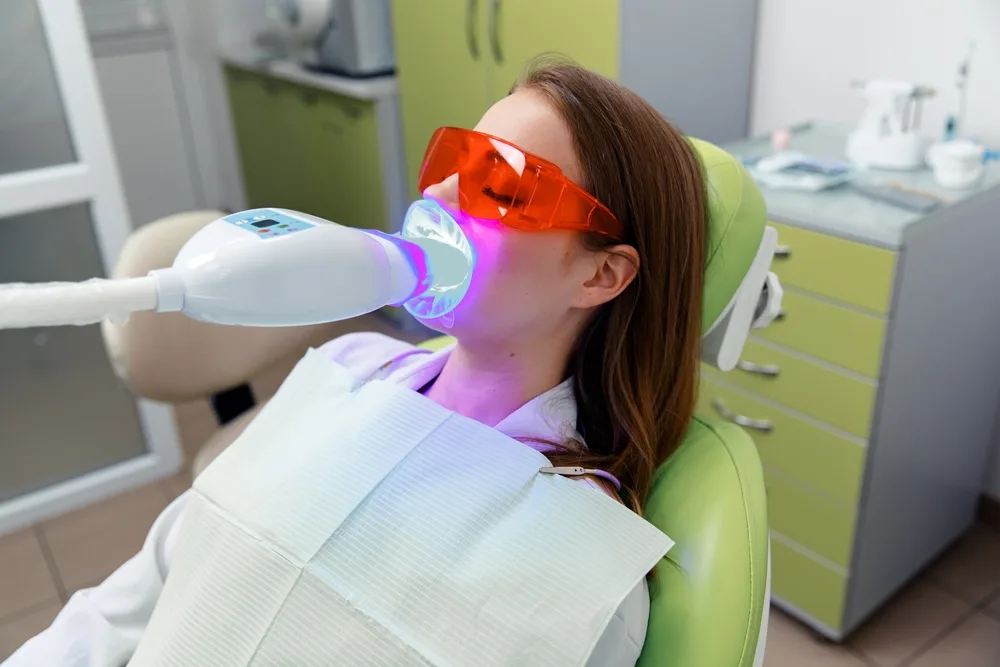
An in-office whitening visit is straightforward. We protect your gums and lips, apply a professional whitening gel to your teeth, and let it work, sometimes with a special light to speed the process. The whole appointment typically takes about an hour. Most patients see a visible difference before they leave, and because a dentist performs the treatment, the gel goes exactly where it should and nowhere it should not. You walk in with stained teeth and walk out with a brighter smile, all in one visit. Some patients brighten best with a single longer session, while others do better with a gentler approach spread across two visits. During your exam, Dr. Tigran Avetisyan will recommend the plan that suits your enamel and your schedule.
What About Sensitivity?
Here is the honest answer: some people feel temporary sensitivity during or after whitening. It usually fades within a day or two. We take steps to minimize it, including checking your teeth beforehand for exposed roots, cracks, or gum recession that could make sensitivity more likely. If you already have sensitive teeth, tell us. We can adjust the approach or suggest alternatives. The goal is a brighter smile, not an uncomfortable week, and we would rather set the right expectation than promise a sensation-free experience.
How Long Results Last, and Touch-Ups
Whitening is not permanent, but results can last a long time with good habits. Rinsing after coffee, tea, or red wine helps, as does keeping up with regular cleanings, including our gentle AIRFLOW hygiene option. Most patients enjoy their brighter smile for many months before wanting a touch-up, and touch-ups are simpler than the first treatment. Think of whitening as maintenance, like a haircut: a little upkeep keeps the result looking its best.
Who Should Check With the Dentist First
Whitening is not right for everyone, and a quick exam sorts that out. If you have untreated cavities, gum disease, very sensitive teeth, or extensive dental work like crowns or veneers on front teeth (whitening gel does not change their color), talk with us first. Patients who are pregnant or nursing should also check with their dentist. During your visit, Dr. Tigran Avetisyan will confirm that whitening is a good fit for your teeth and recommend the approach most likely to give you the result you want, safely.
Ready to take the next step?
Booking takes about a minute. Book online anytime, or call us at (781) 863-9826.
Book appointment online